
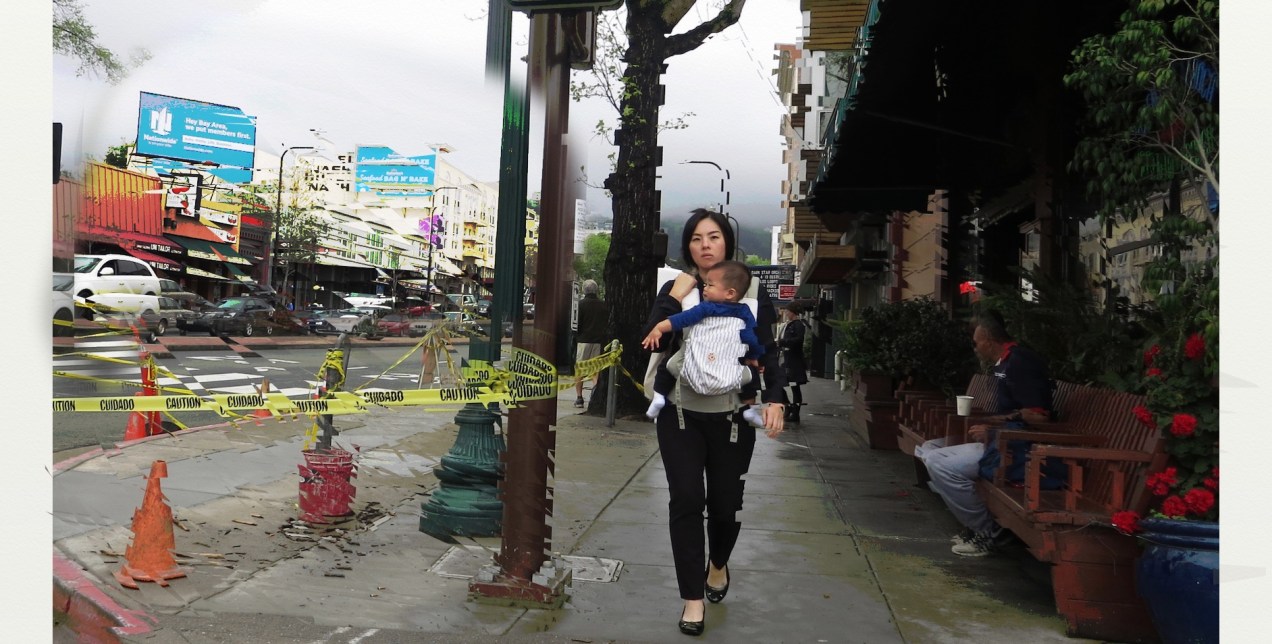
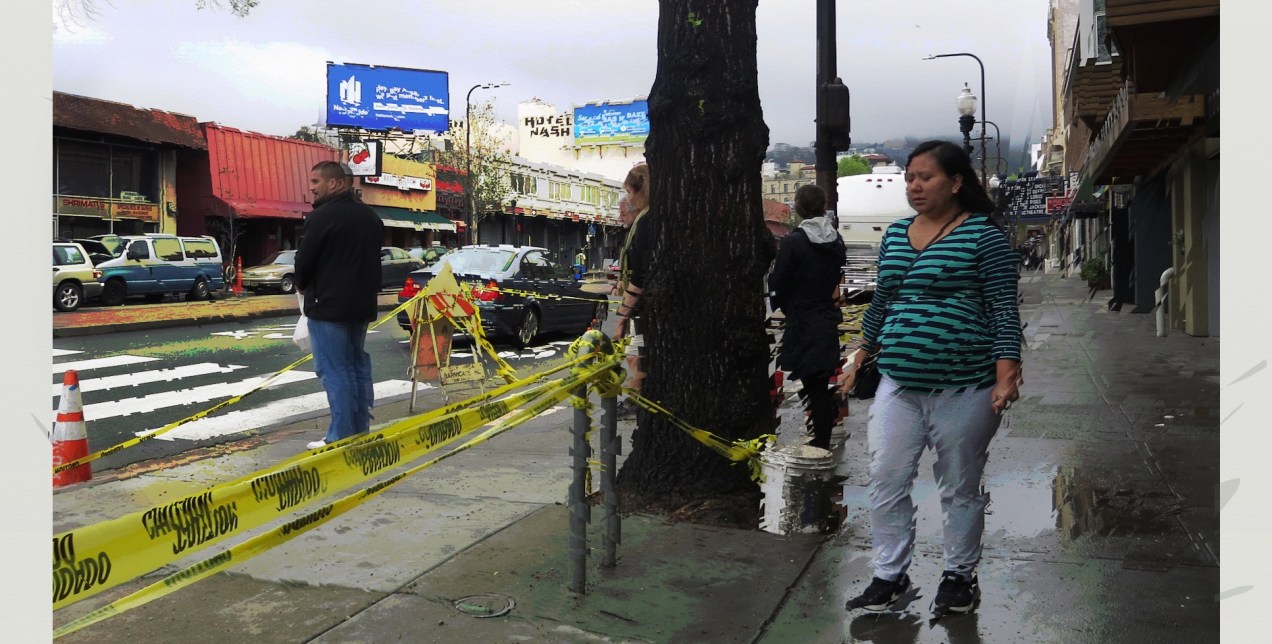
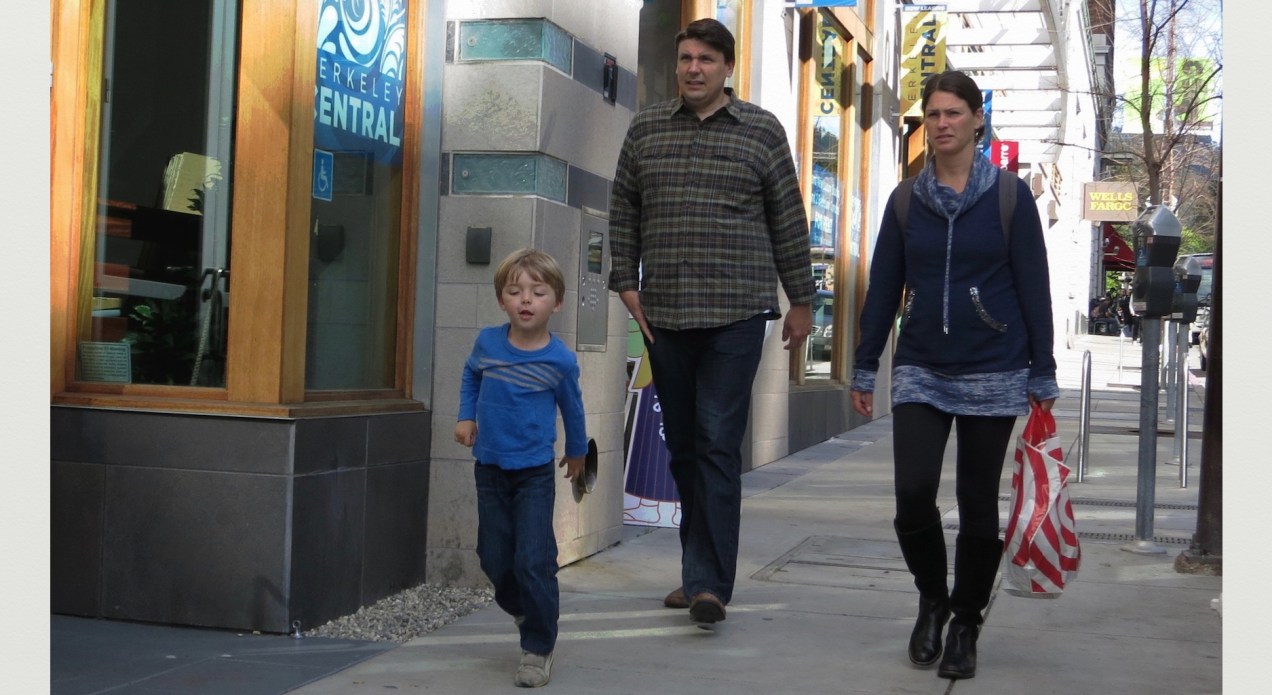
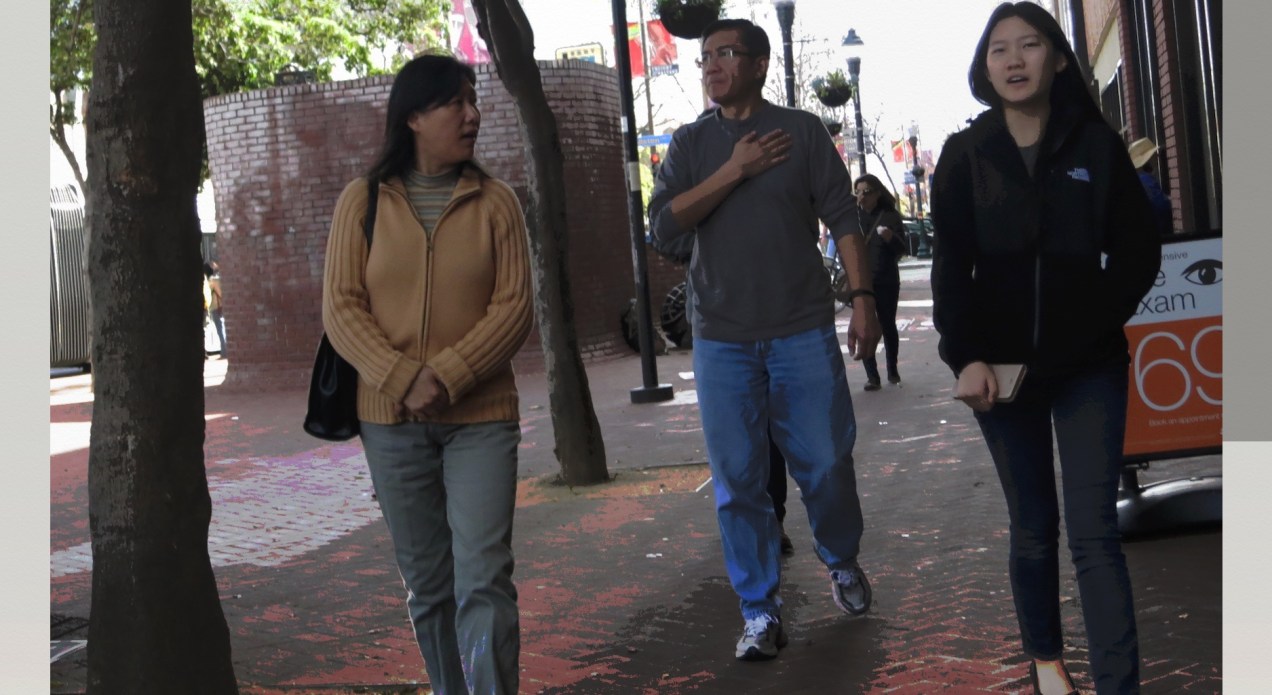
Pedestrians, University Ave, Berkeley Ca
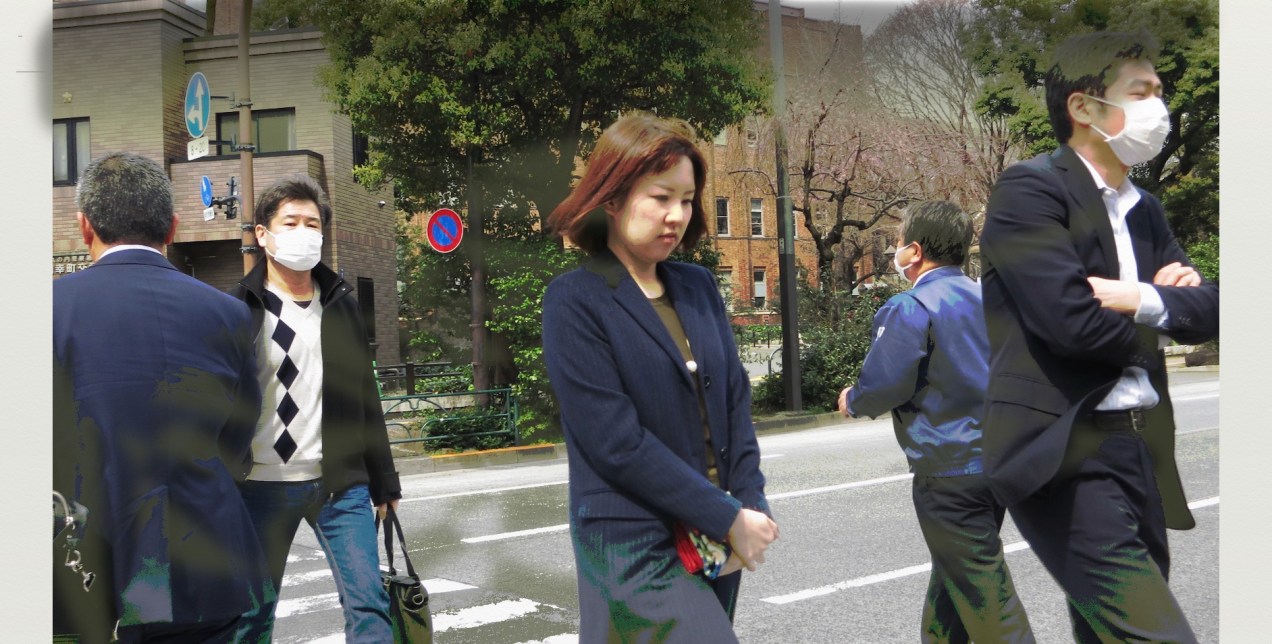
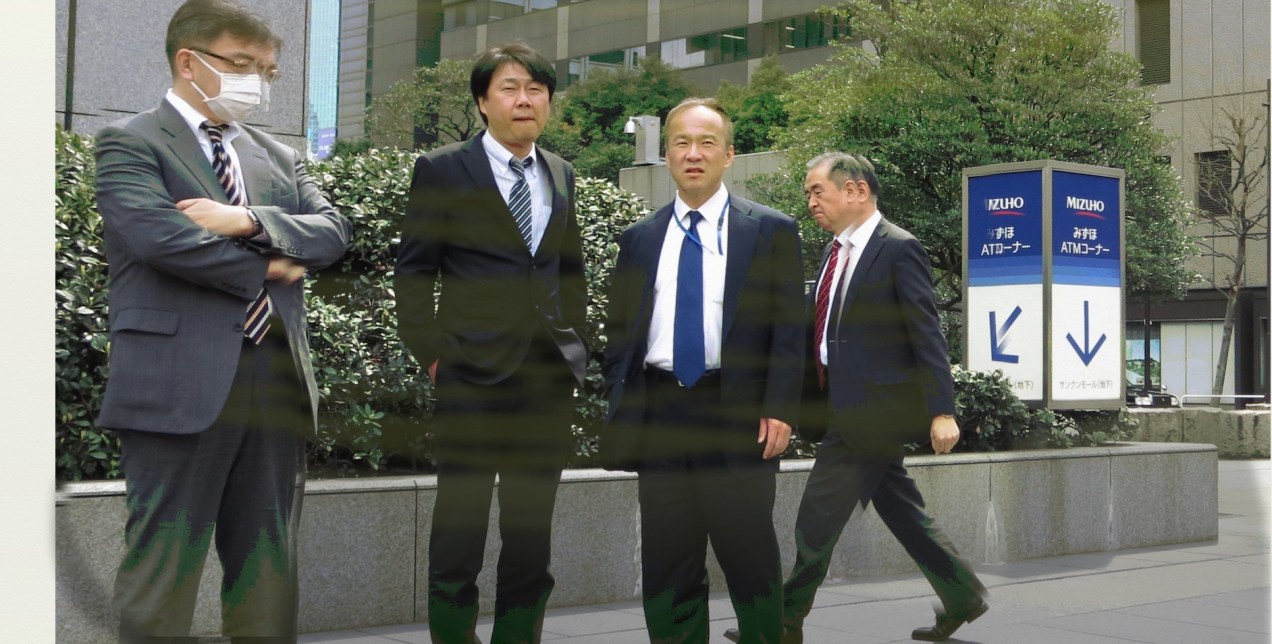
The business neighborhood near Hibiya Park, midday dreams of early spring

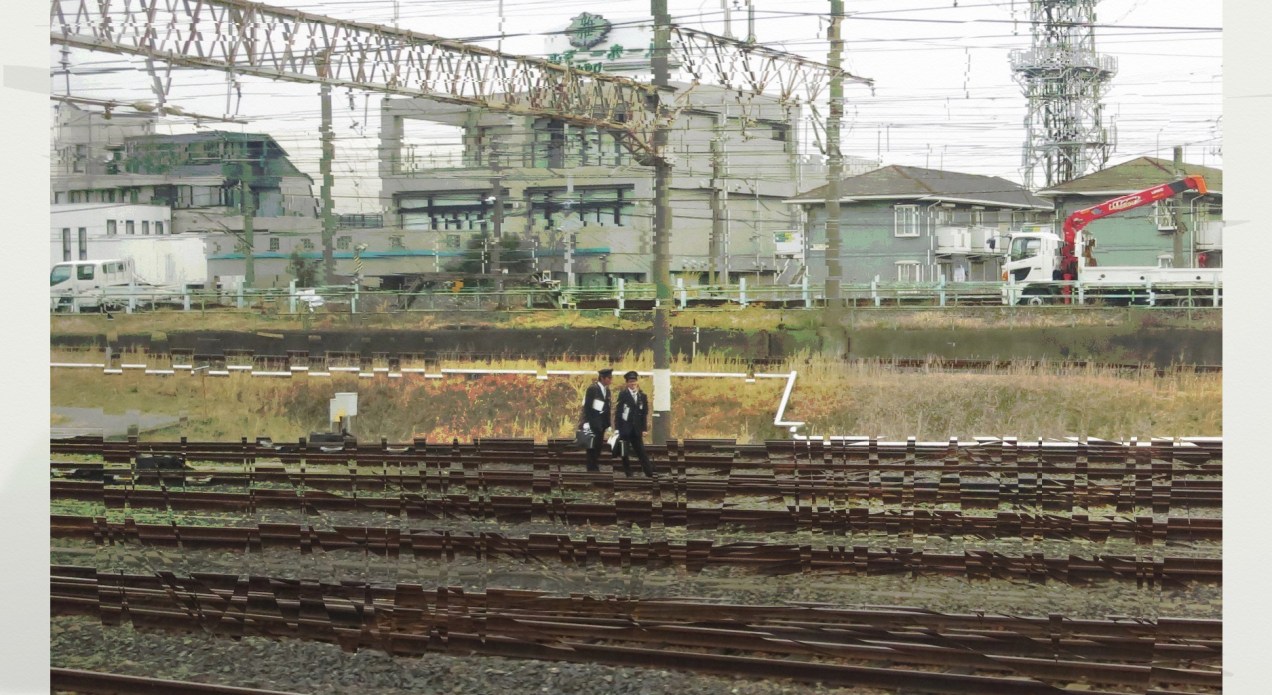
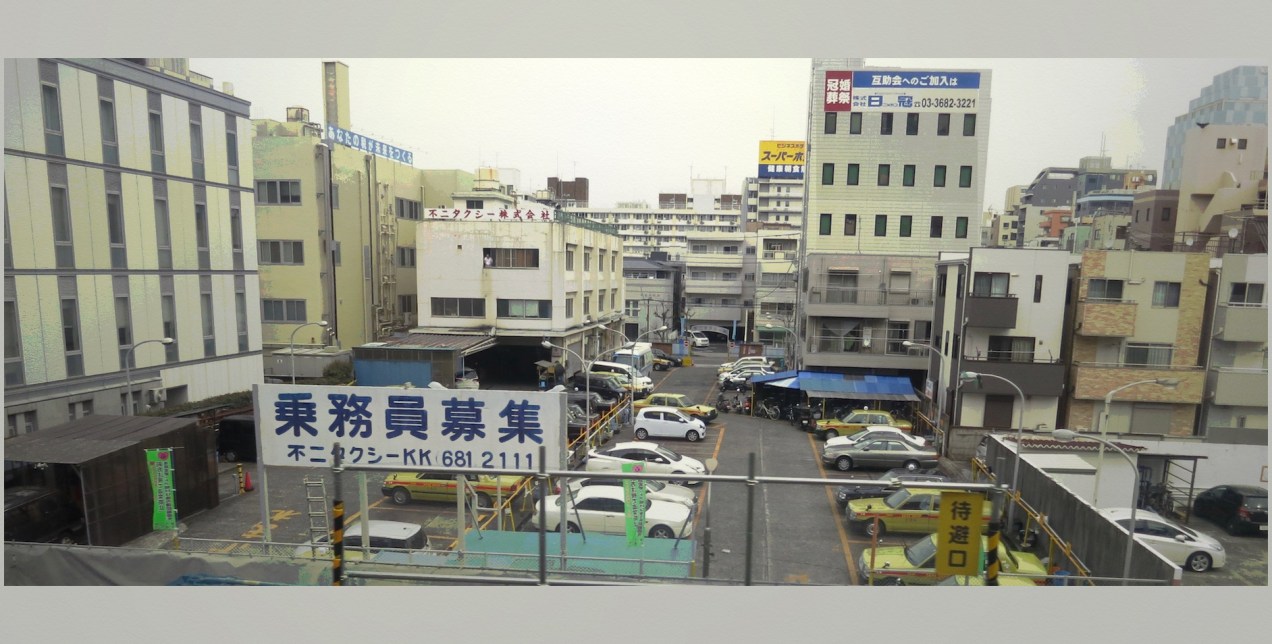
Taking the train into the city, from the airport. The train that starts from the airport is a subdued affair. On crowded commuter trains people are busy texting, others napping, and there is usually a man hunched over, scanning a racing form. On long distance trains people eat elaborate box lunches, and older men drink beer or something stronger. The train trip is part of a happy or anticipated event. But the airport train has only people who have just come from other countries and are waiting to reenter their lives. They are temporarily without tension or purpose. The scenes out the train window mean little to them. Two train conductors stand in the middle of an expanse of tracks, apparently waiting to start a shift. There is a rectangular, aging building in which the Fuji Taxi Corporation has its headquarters, with its fleet of cars outside. A man in an undershirt stands looking out an upper window. A dispatcher on a break? a driver waking up after a night shift? Fuji Taxi also has a sign facing the train track advertising for drivers. It looks as though they are perpetually short. On the taller building across the taxi yard is an advertisement for a mutual aid shareholding company. Those who pay in monthly will have their expenses covered, in the case of an unexpected wedding or sudden funeral. Under the sodden sky of this late Friday morning in mid-March, people are going about their lives,somewhere else. The parked cars and buildings stand about, quietly.
The Fuji taxi corporation (below), looking for drivers

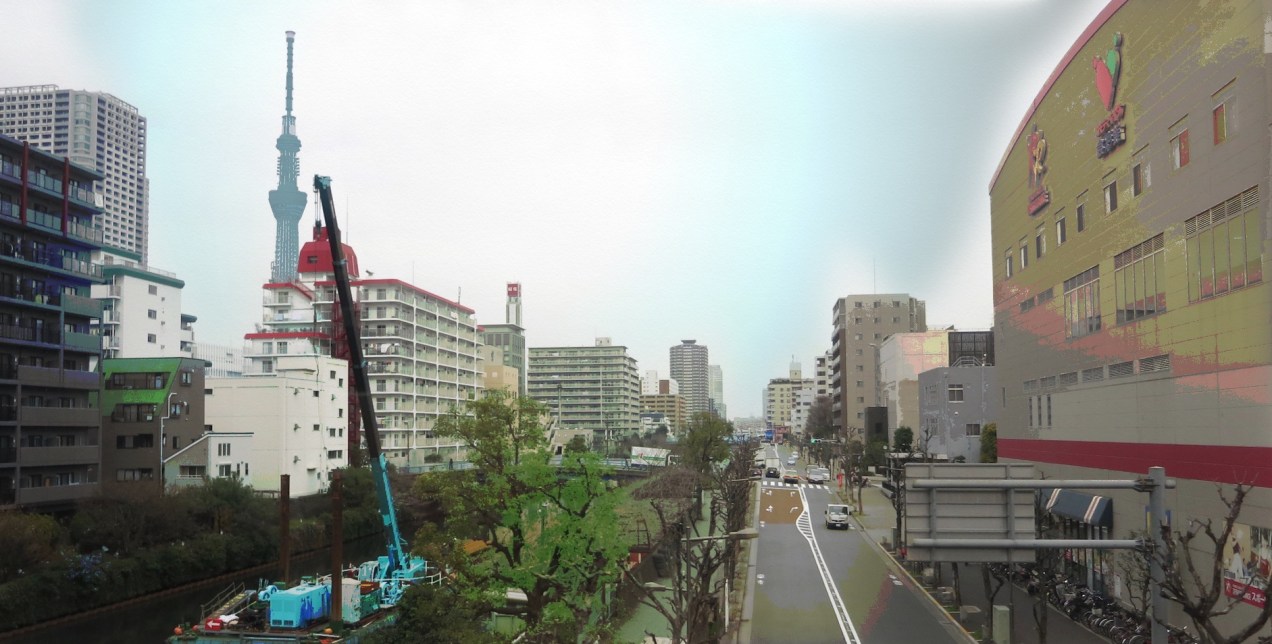
As a sign that the train is about to enter the city proper, a place that can distinguish itself by putting up a spire of symbolic intensity which will draw a crowd of spectators, from the train window there are glimpses of the Tokyo Skytree.

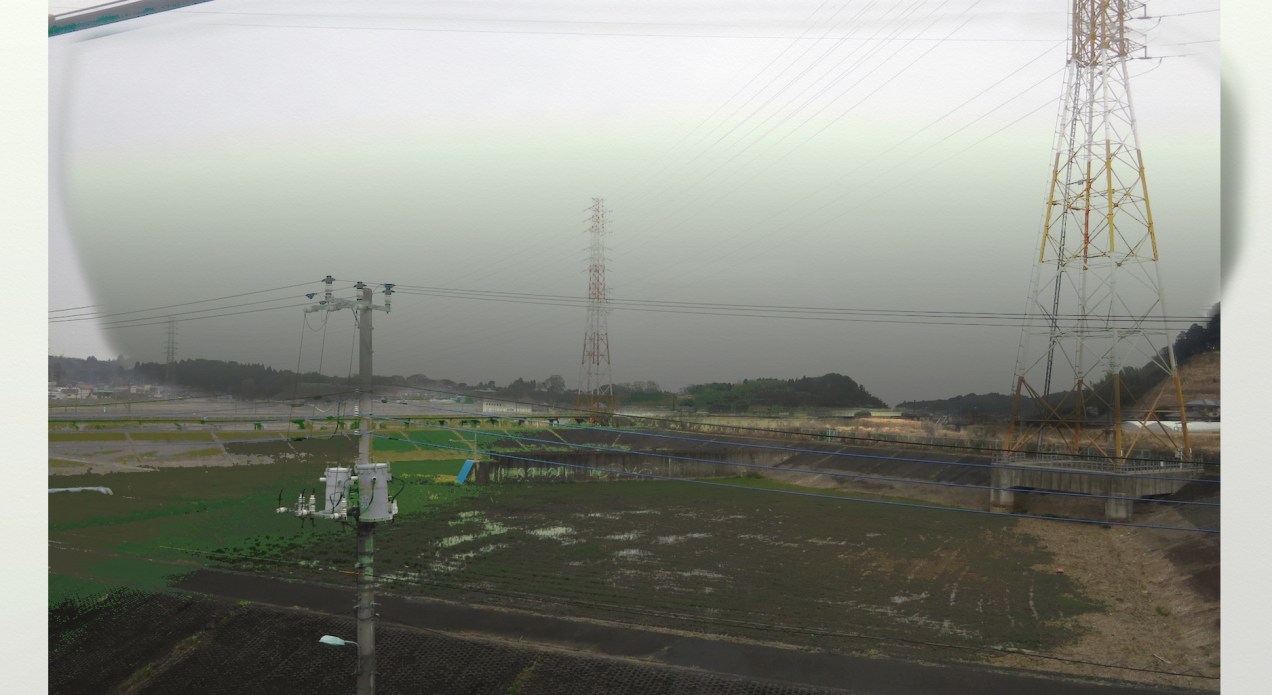
Landscapes in passing, Tokyo outskirts
Having flown in on an airplane, I take on the guise, the persona, of the international traveller. As an international traveller, I am drawn like a moth toward the center of the city, the capital city — but first I must spend precious time passing through its outskirts. The center is a concentration of gleaming attractions conducive to any traveller, but also a charmed site which reflects the cosmopolitanism of those who flock to it. Busy with people coming and going, it is burnished with the regard of distant places, its business and concourse with the world at large. In contrast, the outskirts or outlying suburbs seem a dull satellite to its feverish sun, a place sunk in itself, with nothing to offer except the wear and tear of lives being lived, forever remote from the traveller passing through impatiently. The international traveller only wishes the fast train would go faster. The few remaining farm houses with rice paddies must be subject to disinterested glances from the passing train, and are hemmed in by transmission towers and high tension wires. Between low hills where there are no houses, there is just scraped up earth arranged in some drainage pattern, and more transmission towers. A single person strides across a narrow bridge over a canal, another person is alone by the water’s edge, without a dog to walk or a fishing pole. A trio of residential complexes flaunt their identicalness, as though residents of Complex A might once or twice find themselves searching for their own door in Complex C. A kindergarden, a construction site, a chain noodle restaurant, the platform of a minor station: in a moment of illusion, all these seem interchangeable, as though they could be mistaken for their counterparts somewhere along the same route. Yet compared to the city center, here there is space between things, which makes every item in the landscape stand out distinctly, at least for a second as they flash past.
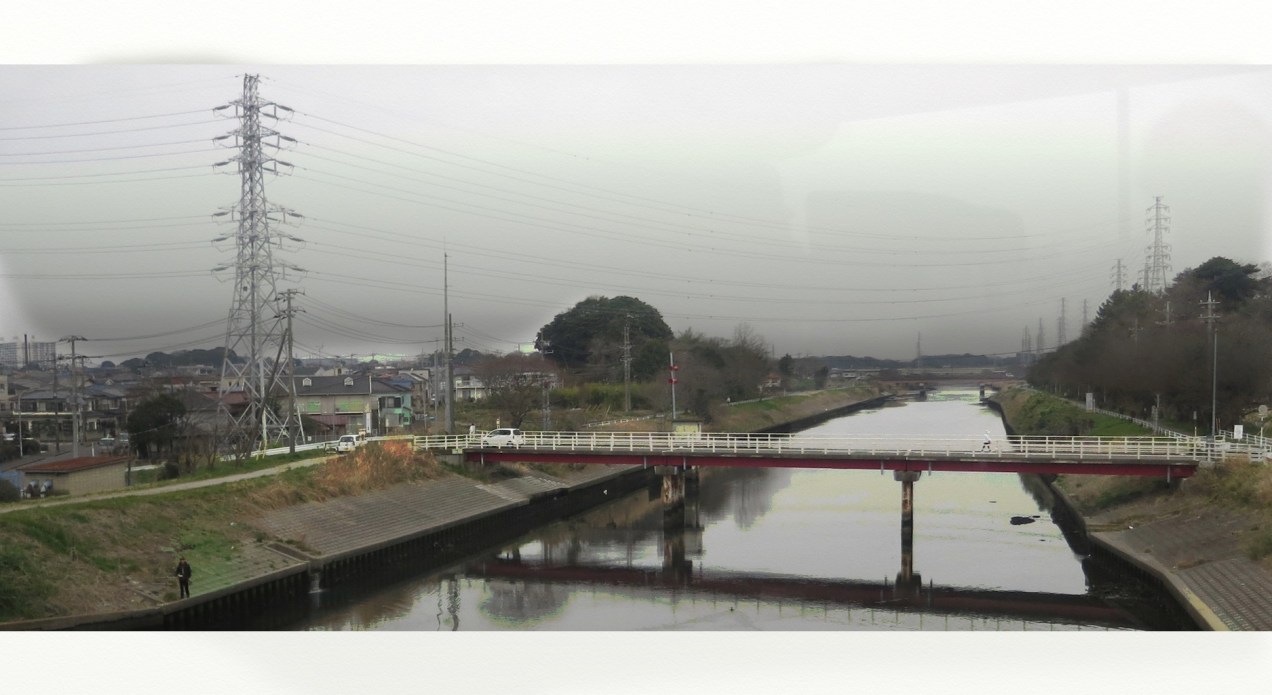
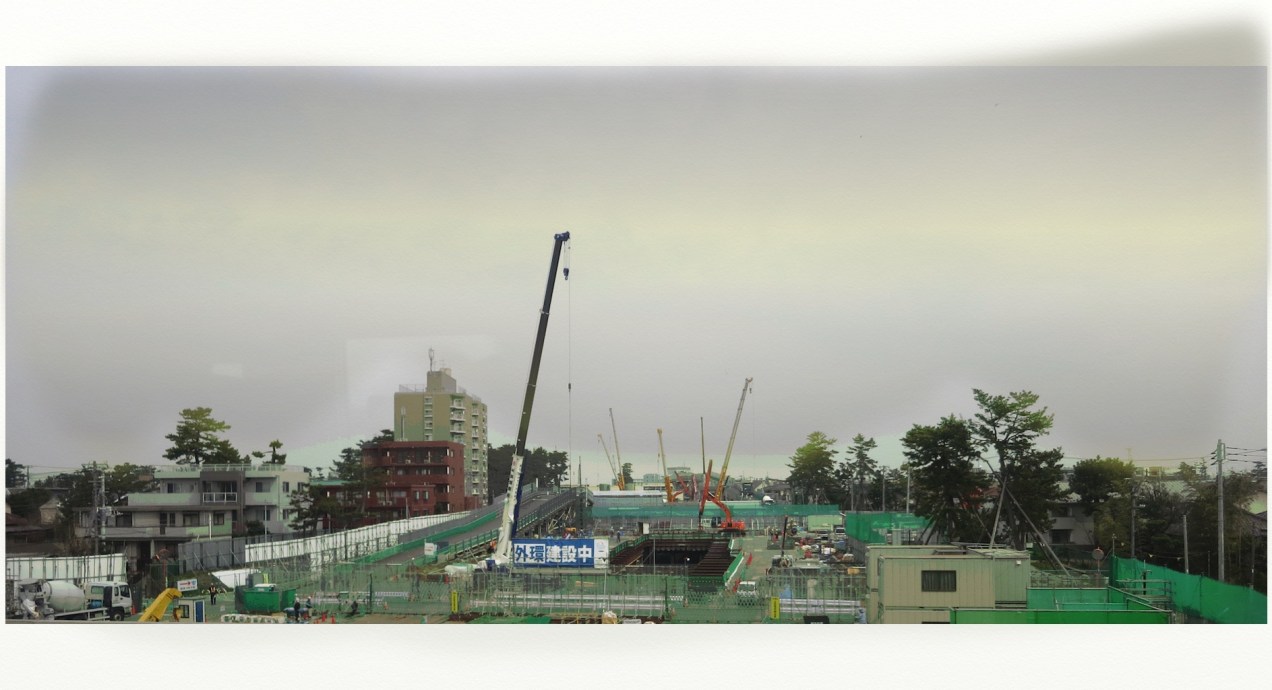
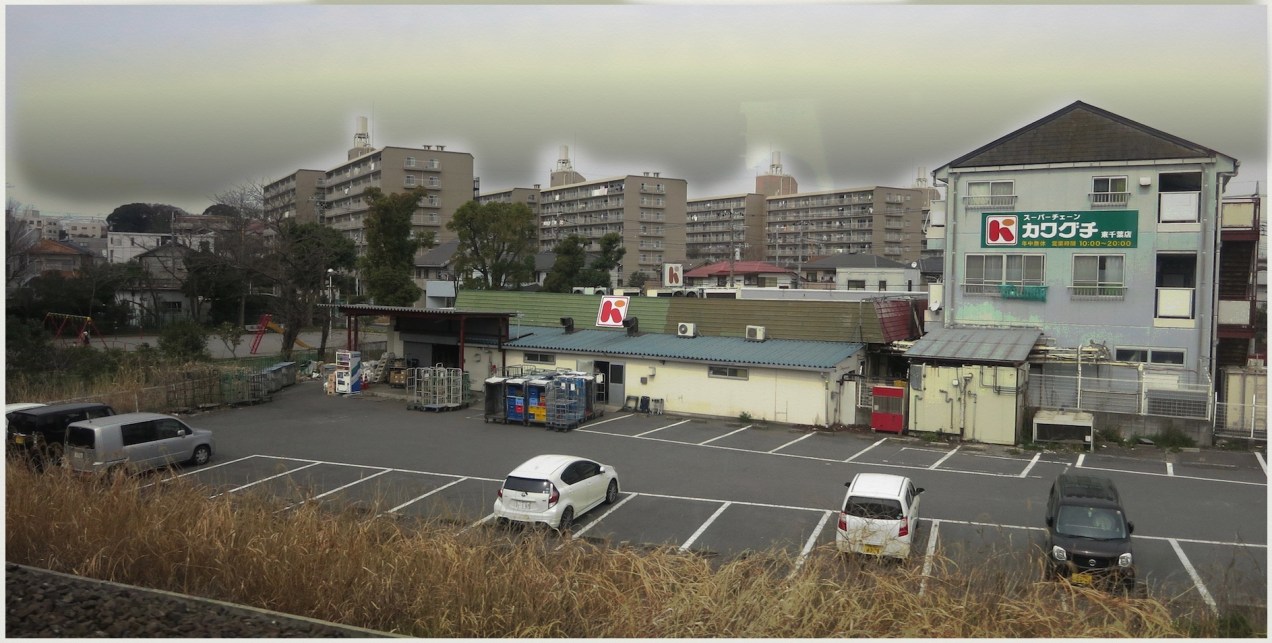
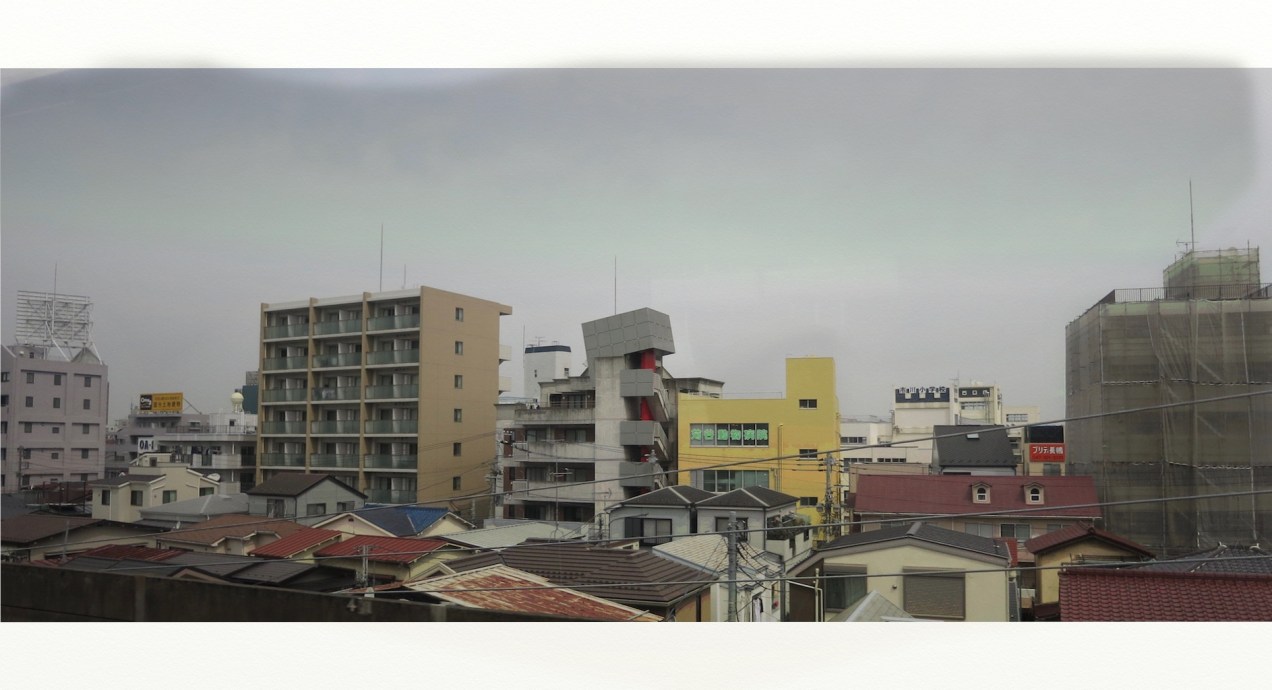
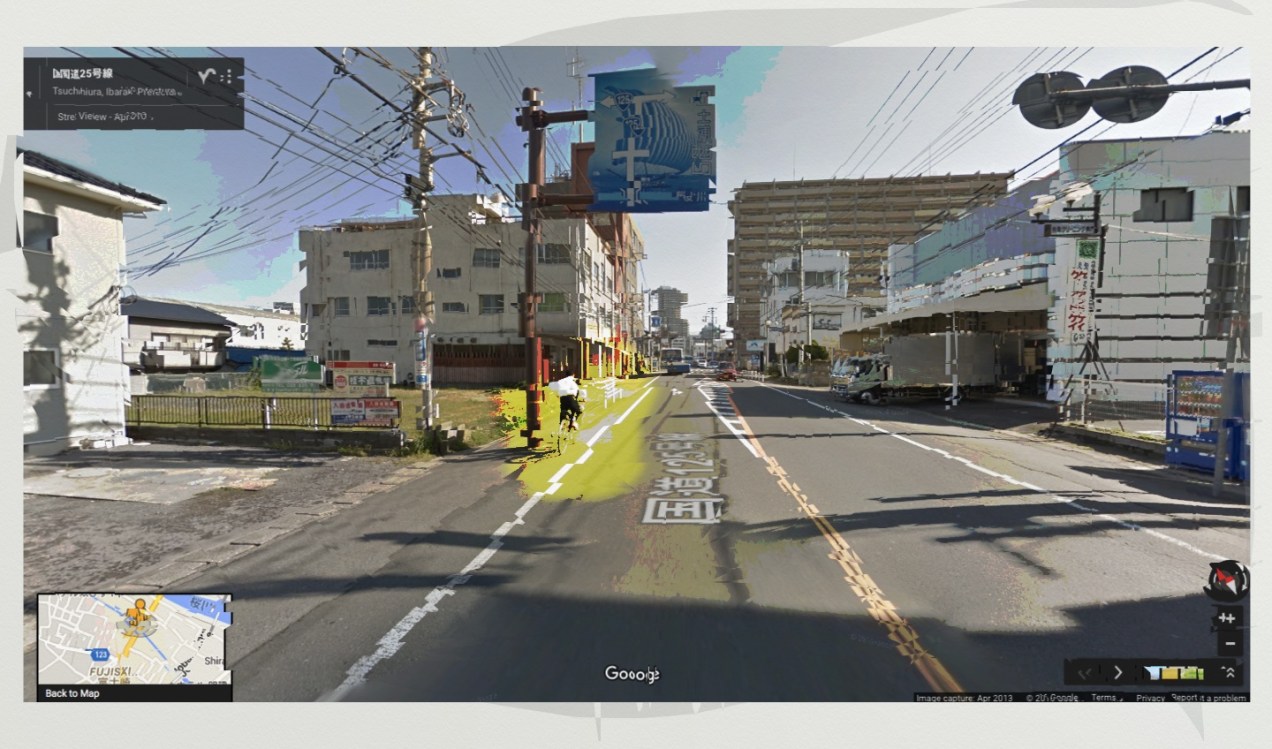
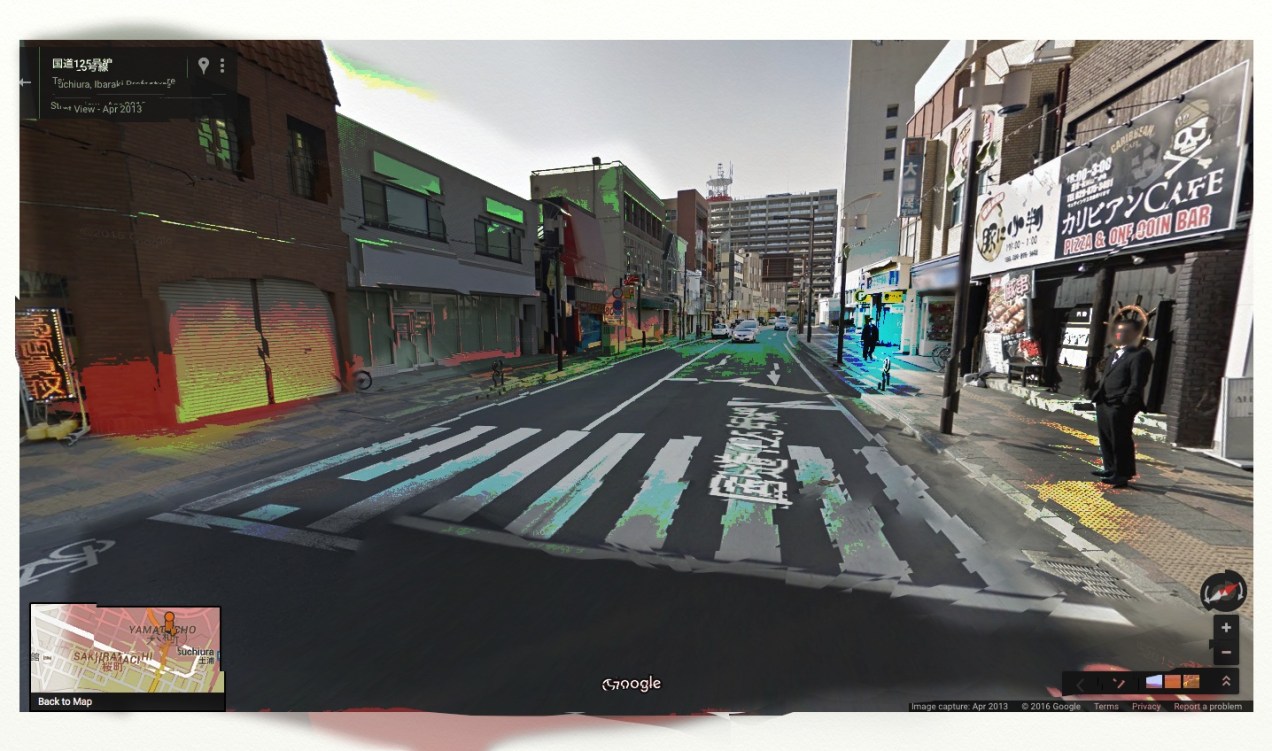
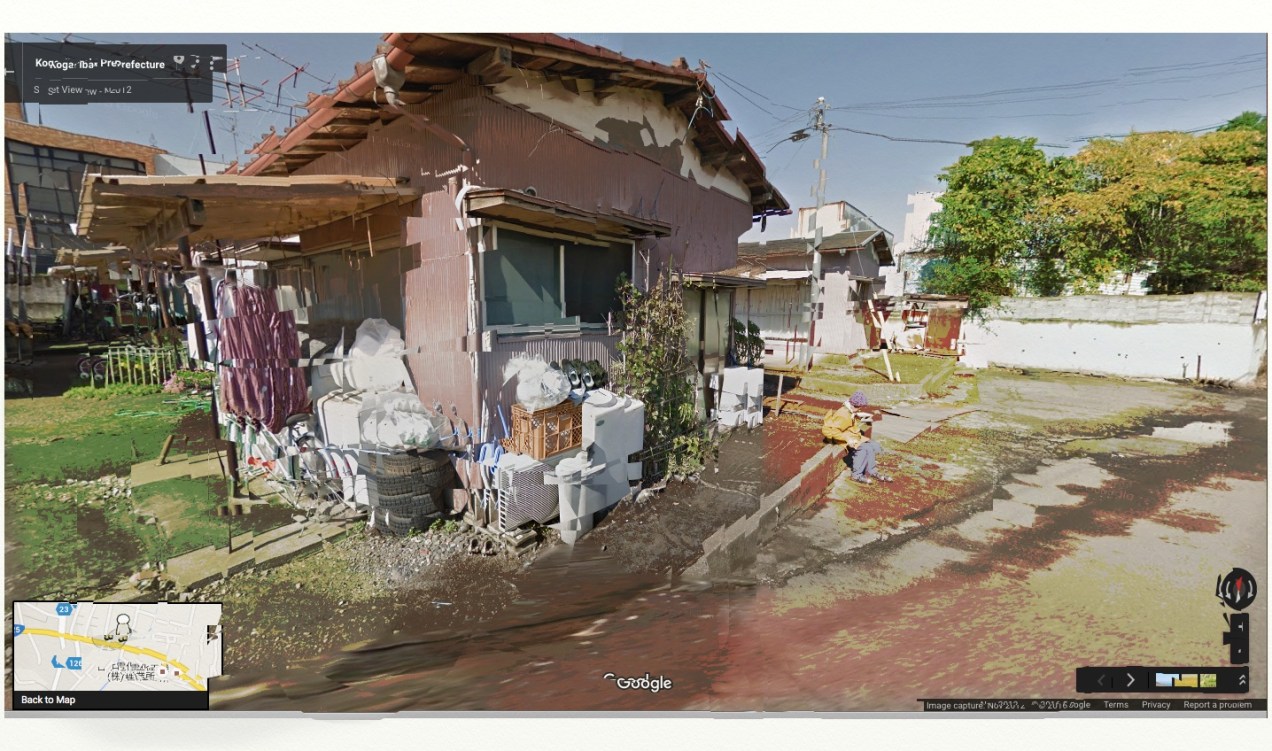
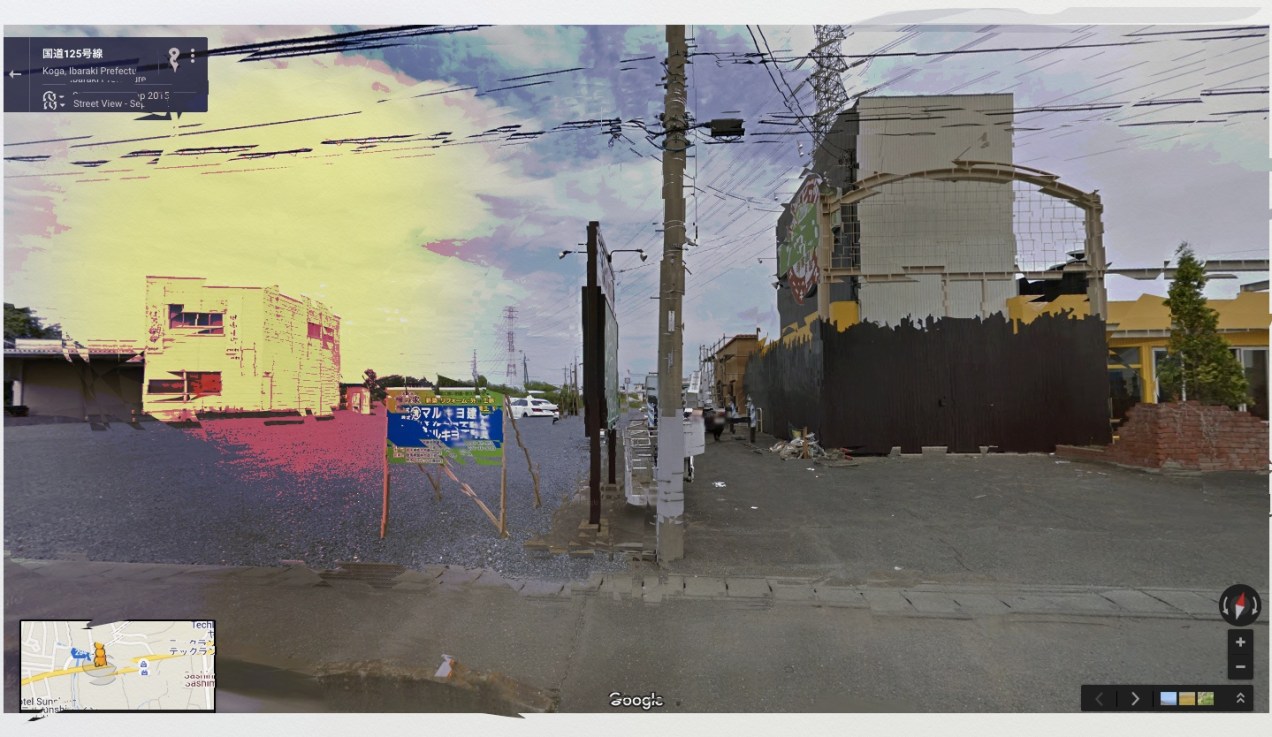
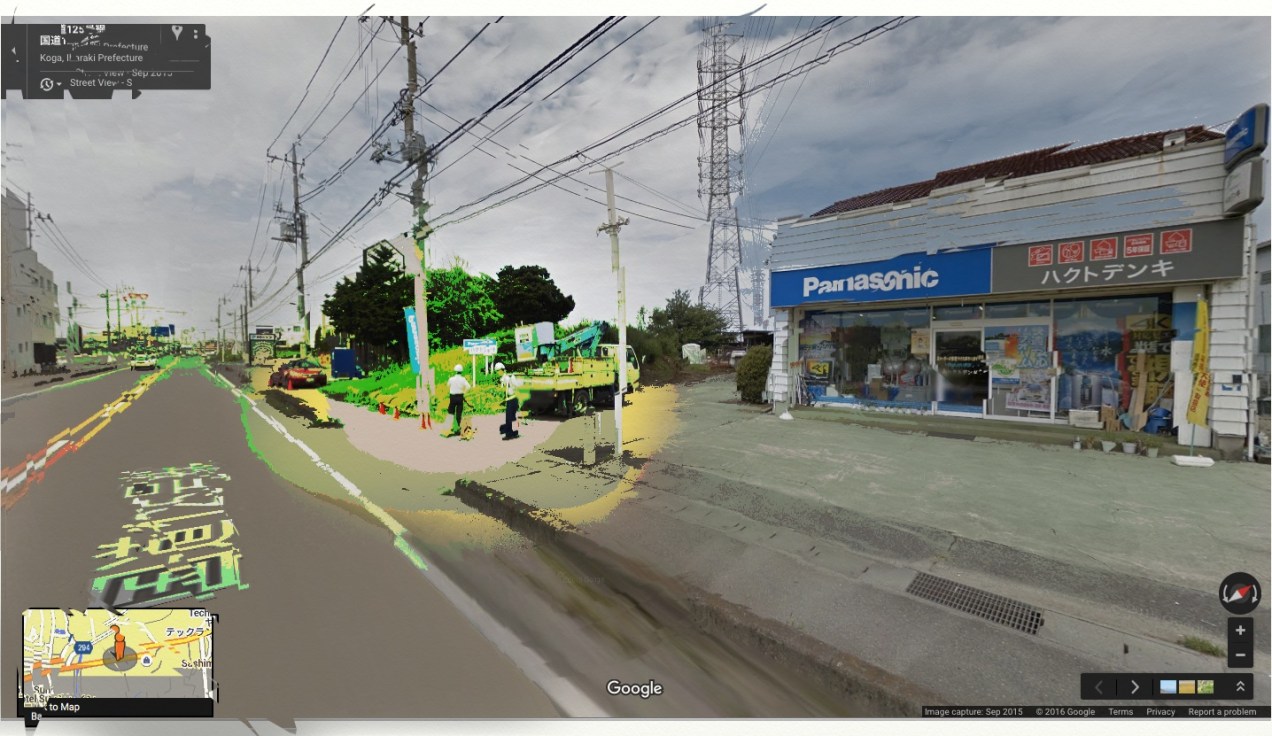
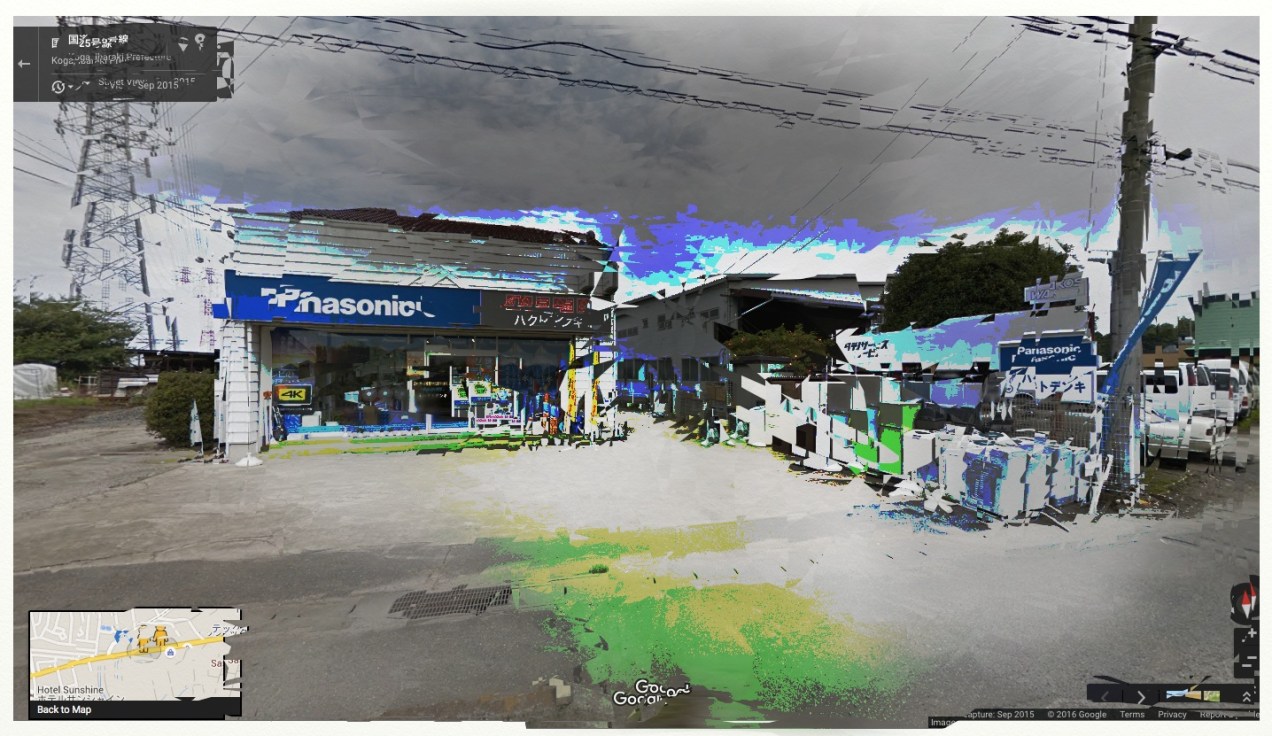
Highway 125, urban, rural, and in-between
Caribbean Cafe, Pizza and One Coin Bar (all drinks cost 500 yen, equivalent to one 500 yen coin)
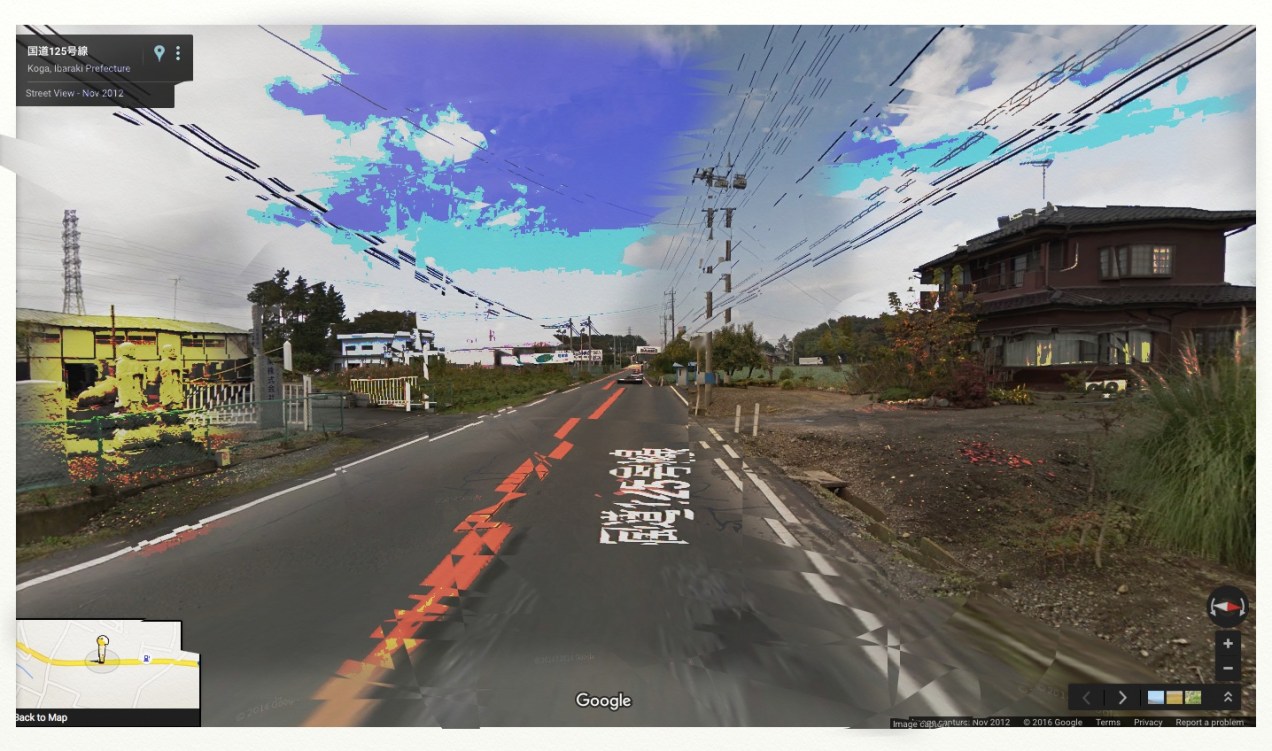
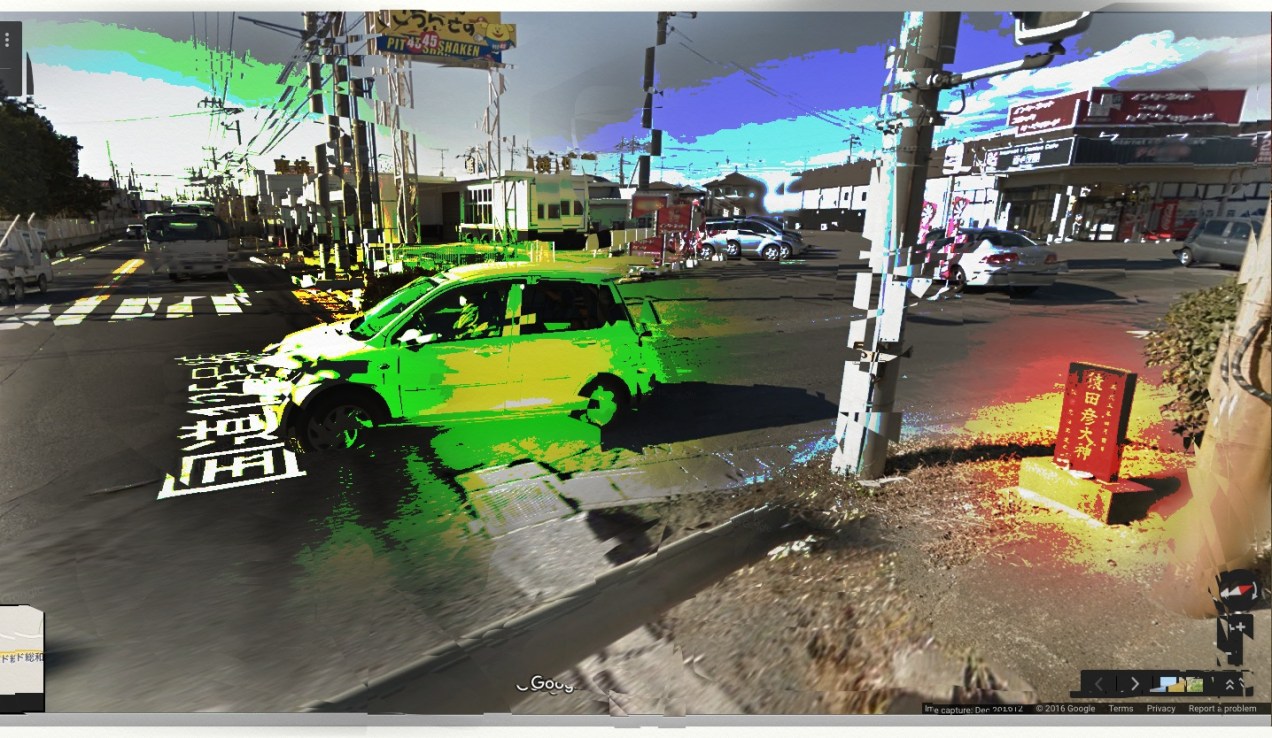
The following refers to the inscribed stone slab in the bottom right of this image.
“I am a someone who lives in Koga City, Ibaraki prefecture. In my neighborhood there are many stone steles with the inscription “Sarutahiko ookami, or Sarutahiko◯◯. Height is roughly up to the knee of an adult.
Old ones are in time replaced with new ones, they are usually in the front of peoples’ gardens or around the grounds of houses.
I have lived here four years since I married in, and my husband, a native here, knows nothing about them. As far as he was concerned, they had always been here and he had never thought about them.
Can anyone tell me about them? It’s a minor matter, but I’m curious.”
Answer: “I am a resident of Koga city also. Sarutahiko ookami is a deity which appears in Japanese mythology. He appears in the Kojiki and Nihongi as an earth deity who guided Ninigi no mikoto when he descended from heaven.
Because it is said, ‘disaster appears from the northeast,’ the deity is enshrined at the northeast side of the house, in order to prevent disasters from occurring.
Old houses built before the war often had these steles, but in houses built after the war they are fewer. There was one in the house I grew up in. Belief in Sarutahiko ookami is all over Japan. The center of worship is in Ise.”


 tom howell paintings and photos